Now Reading: Future of Access Control
-
01
Future of Access Control



In recent years, access control technology has undergone significant transformations. From the simple days of physical keys to more advanced biometric systems, access control has become an integral part of security solutions across industries. The future or access control requires that security professionals and businesses need to stay up to date with the latest advancements to ensure the safety of their assets, people, and information. As we venture beyond 2024, here are some exciting new trends and breakthroughs in access control technology that are redefining the way we think about security.
Biometric Authentication at the Next Level
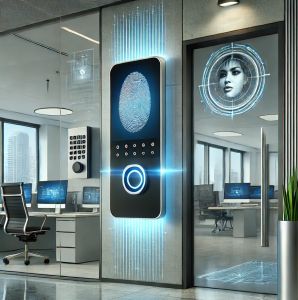
Biometrics have already played a prominent role in access control, but advancements in this area are set to transform user experience and security. In 2024 and beyond, we’re seeing the emergence of even more sophisticated biometric modalities, such as:
• Vein Pattern Recognition: Building upon traditional fingerprint and facial recognition systems, vein pattern recognition technology uses infrared light to capture the unique vein patterns in a person’s hand or finger. It’s incredibly accurate, difficult to spoof, and non-invasive, making it a leading contender for high-security environments.
• Advanced Facial Recognition with AI Integration: While facial recognition has been used for years, the integration of artificial intelligence (AI) has significantly enhanced its capabilities. AI-driven facial recognition systems now have the ability to operate in low-light conditions, recognize faces from different angles, and even identify subtle changes in appearance due to aging or facial hair. This makes the technology more reliable and scalable for a wide range of applications, from corporate offices to large-scale public venues.
• Retina and Iris Scanning: These methods are becoming more mainstream, offering higher levels of accuracy than traditional fingerprinting or facial recognition. With unique patterns in each individual’s retina or iris, they are nearly impossible to replicate or forge, positioning them as a top choice for high-security facilities.
 AI-Powered Smart Access Control Systems

AI has revolutionized many aspects of security, and access control is no exception. The latest advancements incorporate AI and machine learning (ML) algorithms to analyze user behavior and improve security measures. Here’s how:
• Behavioral Biometrics: This technology combines biometric data with patterns of behavior, such as typing speed, walking gait, and mouse movement, to continuously authenticate users in real-time. This approach enhances security by ensuring that access is not only granted based on an initial verification (e.g., facial recognition) but also monitored throughout the interaction.
• Predictive Access Control: AI-powered systems can learn to anticipate when and where access requests are likely to occur based on historical patterns. By understanding user habits, these systems can automatically adjust security measures to match varying levels of threat, increasing both efficiency and safety.
• Anomaly Detection: Machine learning models can also analyze access logs to detect unusual behavior, such as someone trying to gain access at an unusual hour or attempting to access multiple doors without authorization. This allows for real-time alerts and rapid responses to potential security breaches.
Cloud-Based and Mobile-Integrated Access Control
Cloud technology has revolutionized many industries, and access control is no exception. Cloud-based solutions offer businesses more flexibility, scalability, and remote management capabilities. Some key developments in the future of access control include:
• Mobile Access Control: With the proliferation of smartphones, mobile access control has become a game-changer. Instead of using physical cards or key fobs, users can simply unlock doors using their smartphones or wearable devices via Bluetooth or NFC. This is not only more convenient but also reduces the risk of lost or stolen credentials. As smartphones become more secure with features like biometric authentication and secure elements, this type of access control will become more widespread.
• Cloud-Based Management: Cloud technology enables centralized management of access control systems from anywhere in the world. Administrators can easily add or revoke user access, monitor entry logs, and generate reports remotely, without being tied to a physical location. Cloud-based solutions also allow businesses to scale their access control systems without the need for costly on-premises hardware upgrades.
• Integration with IoT: The growing trend of the Internet of Things (IoT) is also influencing access control systems. By integrating IoT devices, access control systems can automate security tasks, such as locking doors after hours or monitoring the status of security cameras in real-time. This integration creates a seamless and intelligent security ecosystem.
Contactless and Touchless Technology
In the wake of the COVID-19 pandemic, the demand for contactless and touchless access control has surged. This trend continues to evolve, with the latest solutions providing even more hygienic and efficient methods of authentication:
• RFID and NFC Technology: RFID (Radio Frequency Identification) and NFC (Near Field Communication) have long been used for contactless access control, but newer, more secure versions of these technologies are now being adopted. Advanced encryption and anti-cloning features make RFID/NFC-based systems harder to hack and offer a more user-friendly experience.
• Voice Recognition: The use of voice recognition is gaining traction as a contactless biometric solution. Voiceprints are unique to each individual, and advances in AI-driven voice recognition are improving its accuracy and security. This technology could eventually be used in combination with other biometric methods for multi-factor authentication, enhancing overall security.
Quantum-Resistant Cryptography
With the advent of quantum computing, traditional cryptography methods face the threat of being easily broken. As a result, the development of quantum-resistant cryptography is becoming a priority for secure access control systems. These new algorithms are designed to withstand the computing power of quantum computers, ensuring that sensitive data, such as user credentials and access logs, remains secure in the future.
The future of access control systems will require quantum-resistant encryption. This will likely become essential in high-security environments such as government buildings, financial institutions, and research facilities, where protecting critical data is paramount.
Decentralized and Blockchain-Enabled Access Control
Blockchain technology is poised to disrupt access control by enabling decentralized, tamper-proof systems. With blockchain, access rights and user credentials can be stored securely across a distributed ledger, preventing unauthorized changes or data breaches. This technology offers several advantages:
• Tamper-Proof Records: Blockchain ensures that access logs are immutable and can’t be altered, offering enhanced accountability and transparency in security practices.
• Decentralized Identity Verification: Users can store their credentials in a decentralized, blockchain-based identity wallet, allowing for secure and verifiable access to various systems without relying on a central authority or database.
The Future of Access Control
The future of access control technology is bright, with innovations that not only improve security but also enhance user experience and operational efficiency. As we move into the post-2024 era, we can expect to see more advanced biometric systems, AI-driven smart security, cloud integration, and blockchain solutions revolutionizing how businesses and individuals secure their physical and digital assets. Staying ahead of these advancements will be key for organizations looking to maintain a competitive edge and ensure the safety of their people, property, and data. The future of access control is now!
Stay connected with FDC for the latest insights on the future of access control! Follow us on Facebook, LinkedIn, and Twitter to explore more about how our solutions can help secure and enhance your property. Don’t miss out on our updates—join the conversation and stay ahead in protecting what matters most!


 Follow