Now Reading: Bigfoot King of Cryptids
-
01
Bigfoot King of Cryptids


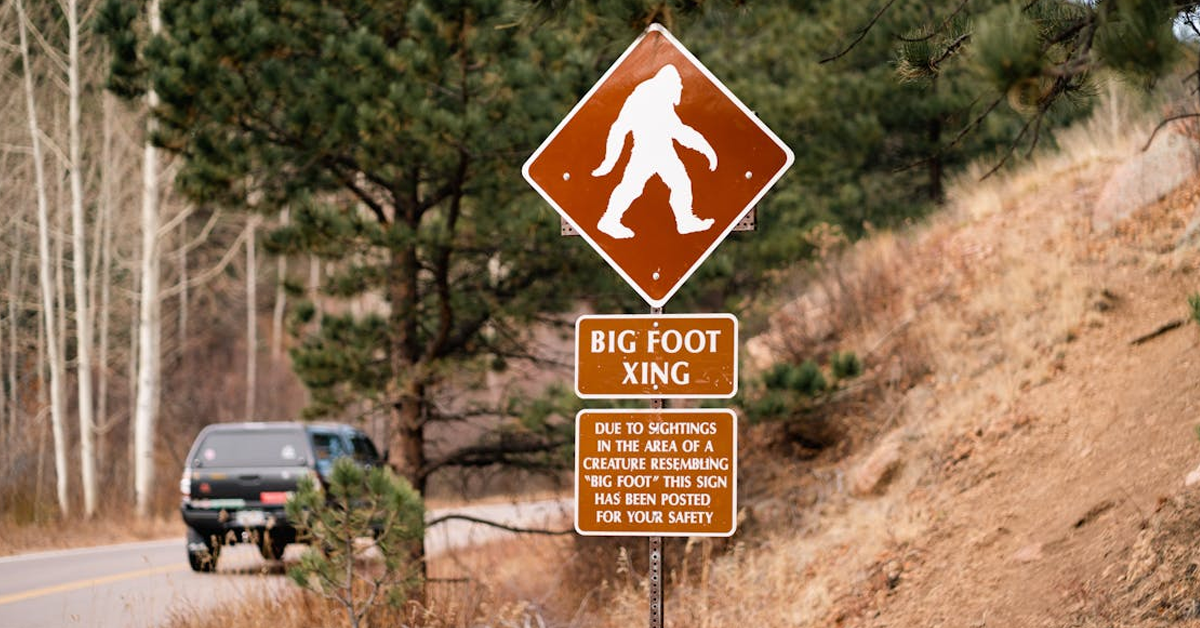
Bigfoot King of Cryptids, also known as Sasquatch, is one of the most famous and mysterious cryptids in the world. This large, hairy creature is said to inhabit the forests of North America, particularly in the Pacific Northwest, and is often described as a giant, ape-like being. The stories, sightings, and legends surrounding Bigfoot have captured the imagination of people for centuries, leading to a subculture of enthusiasts who search for evidence of the creature’s existence. While the scientific community remains skeptical, Bigfoot continues to be an icon in both American and Canadian folklore and popular culture.
History and Folklore of Bigfoot
The legend of Bigfoot is deeply rooted in both indigenous cultures and European folklore. In North America, many indigenous peoples have long told stories of large, hair-covered beings living in the forests. These creatures were often described as being similar to humans but far more elusive and mysterious.
 For example, the Tule River Indian Reservation in California features petroglyphs created by the Yokuts people that are thought to depict a group of Bigfoot-like creatures, known as “the Family.” These ancient carvings, which are around 1,000 years old, show figures with the name “Hairy Man,” a term that is still used today to describe Bigfoot in various indigenous cultures. The folklore of Bigfoot King of Cryptids can also be traced to the European wild man myths. These figures were often described as naked, hairy creatures that lived in the woods, a concept that dates back to medieval times. As Europeans arrived in North America, they brought these legends with them, which may have influenced later Bigfoot sightings.
Across the continent, various tribes have their own names and stories associated with Bigfoot-like creatures. The Cherokee speak of the Tsul’kalu, large giants that lived in the Appalachian Mountains. The Iroquois tell tales of the Genoskwa, a stone-skinned giant, while the Lummi people describe the Ts’emekwes, a creature similar to Bigfoot that roams the forests. In Alaska, the Alutiiq people tell of the Nantinaq, another Bigfoot-like being. The common thread in all these stories is a mysterious, large, hair-covered humanoid.
Bigfoot’s presence in folklore isn’t limited to Native American traditions. Early European settlers, such as Spanish explorers and Mexican settlers in the 16th century, reported encountering similar creatures. They spoke of the Vigilantes Oscuros or “Dark Watchers,” large, shadowy beings that were said to stalk their camps during the night.
One of the earliest accounts of Bigfoot-like creatures in North America comes from a 1929 article published in Maclean’s magazine by Indian agent J.W. Burns. Burns shared stories told by the Sts’ailes Nation, a First Nations group in British Columbia, about sightings of giant, hairy beings living in the wilderness. This article is often considered one of the key moments in the popularization of Bigfoot in modern culture.
The most famous account of Bigfoot in the United States occurred in 1924, when a group of gold prospectors near Mount St. Helens in Washington State reported being attacked by “ape-men” while staying in a remote cabin. They claimed to have encountered large, gorilla-like creatures, and one of the men, Fred Beck, even shot one of the creatures. That night, the prospectors were bombarded with large rocks, and the cabin was damaged. The men fled the area the next morning, but their story caught the attention of the press, making it one of the earliest Bigfoot-related headlines.
Bigfoot Across North America
Bigfoot’s presence is not confined to any single region, and different parts of North America have their own names for the creature. In Canada, the term “Sasquatch” is widely used, but in the United States, regional names for Bigfoot abound. In Florida, it is known as the Skunk Ape, a reference to its foul odor. In Ohio, it is called the Grassman, while in Arkansas, it is referred to as the Fouke Monster. Other names include the Wood Booger in Virginia, the Momo in Missouri, and the Honey Island Swamp Monster in Louisiana. Each region has its own stories and interpretations of the creature, but the overall description remains strikingly similar: a large, ape-like figure, often covered in hair, who lives in remote, forested areas.
Some enthusiasts and researchers prefer to refer to Bigfoot as a “Wood Ape” in order to distance the creature from its more mythical connotations. This terminology reflects the belief that Bigfoot may not be a supernatural being, but rather a type of undiscovered primate species that has managed to remain elusive in the wild.
The Search for Bigfoot
The search for Bigfoot King of Cryptids has led to an array of dubious evidence, including photographs, video recordings, hair samples, and casts of large footprints. Many of these “evidence” claims have been debunked or shown to be hoaxes, but they continue to fuel the belief in Bigfoot’s existence. Perhaps the most famous piece of evidence is the 1967 Patterson-Gimlin film, which allegedly shows Bigfoot walking through a remote area of California. Despite extensive analysis, the authenticity of the footage remains disputed.
In the world of cryptozoology, Bigfoot enthusiasts are often divided on the nature of the creature. Some believe Bigfoot is a surviving species of the extinct giant ape Gigantopithecus, which is believed to have roamed Asia thousands of years ago. Others argue that Bigfoot could be an undiscovered species of hominid, related to ancient species like Paranthropus robustus, an extinct relative of modern humans. However, the scientific community has yet to find any solid evidence to support these claims.
While the search for Bigfoot King of Crytpids has captured the imaginations of many, mainstream science remains skeptical. Most experts believe that the creature is a combination of folklore, misidentification of other animals (such as bears), and hoaxes. Some explanations suggest that Bigfoot sightings could be the result of pareidolia, the tendency of the human mind to see patterns—such as human-like shapes—in ambiguous images. Additionally, reports of Bigfoot vocalizations, often described as howls or screams, may be misidentifications of other animals’ calls.
Bigfoot King of Cryptids!
Bigfoot, or Sasquatch, has become an enduring symbol of mystery and folklore in North America. From ancient indigenous legends to modern-day sightings, the creature continues to captivate the public imagination. Whether Bigfoot is a real, undiscovered species or simply a cultural phenomenon fueled by hoaxes and misidentifications, it remains one of the most famous cryptids in the world. For now, the legend of Bigfoot King of Cryptids lives on, with new stories and sightings continuing to emerge from the wilderness, keeping the mystery alive.
Stay connected with FDC, Florida’s gate company and access control leader, with offices in Tampa, Jacksonville, Orlando, Miami and Melbourne! Follow us on Facebook, LinkedIn, and Twitter to explore more about how our solutions can help secure and enhance your property. Don’t miss out on our Bigfoot King of Cryptids updates—join the conversation and stay ahead in protecting what matters most!


 Follow